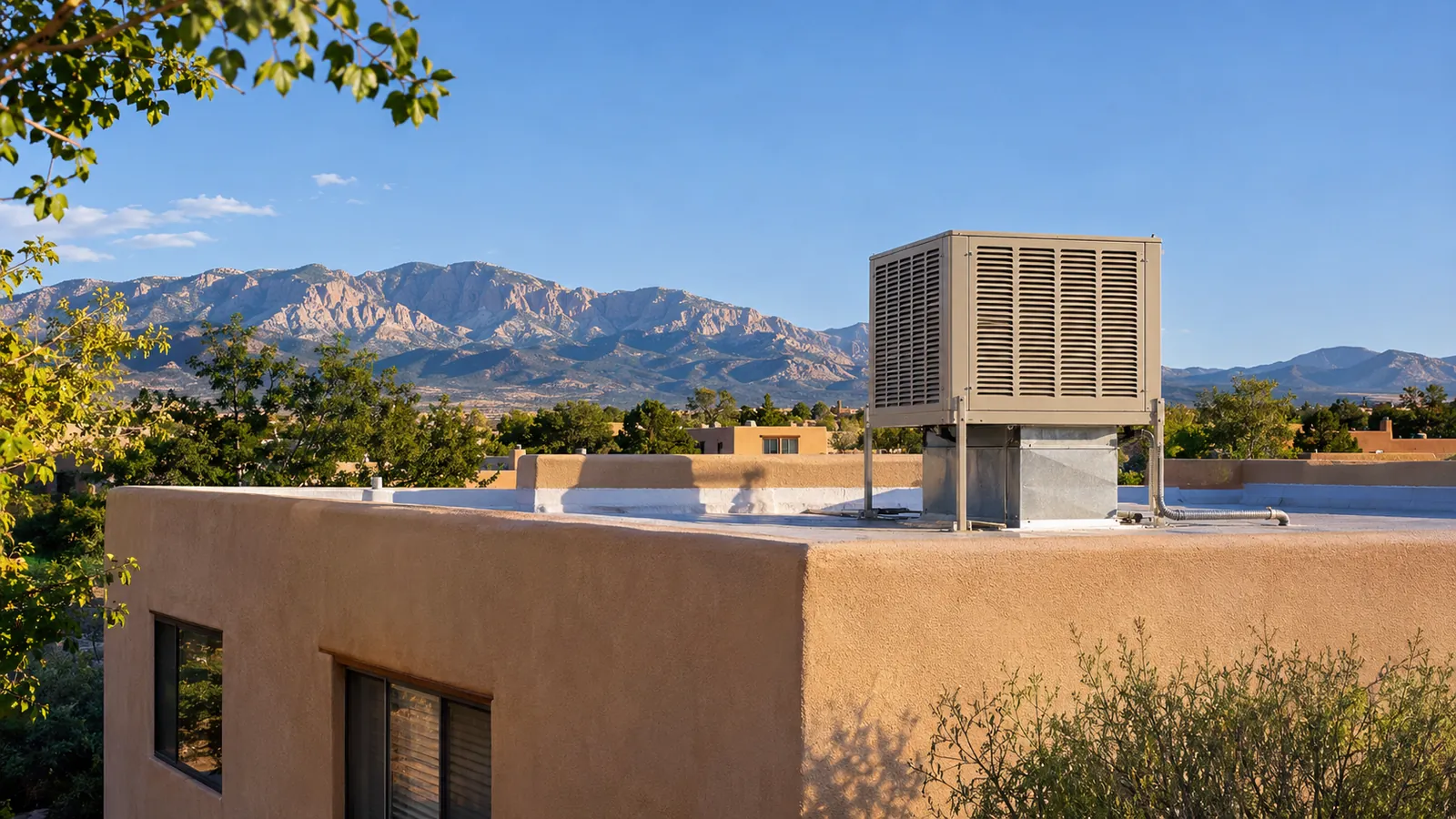
Albuquerque runs on evaporative cooling
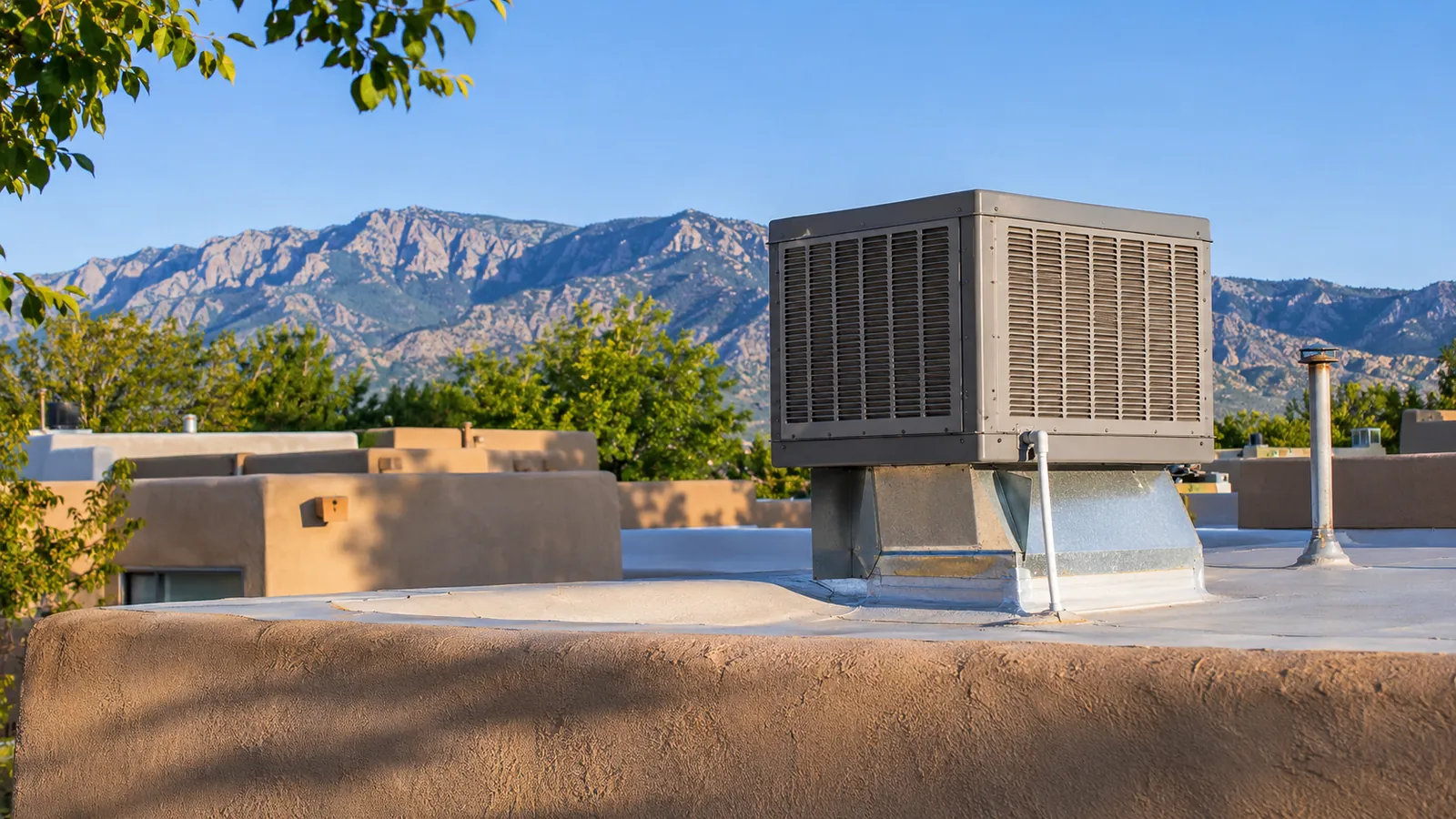
Walk any neighborhood in Albuquerque in July and you'll see them on the roofs: big metal boxes that have kept this city cool for generations. In dry heat, a swamp cooler can drop the air temperature dramatically for a fraction of what refrigerated air costs to run. When it's working, it's the best deal in home comfort.
When it isn't working, the house turns into an oven fast. Most cooler problems come down to a handful of parts, and most of them are quick fixes once someone gets on the roof and looks.
What we do
Signs your cooler needs attention
- Blowing warm or barely cool air. The pads aren't getting wet, or they're clogged with minerals.
- Musty or fishy smell. Stagnant water, old pads or algae in the pan.
- Water dripping off the roof or down a wall. An overflowing float, a cracked pan or a rusted-through bottom.
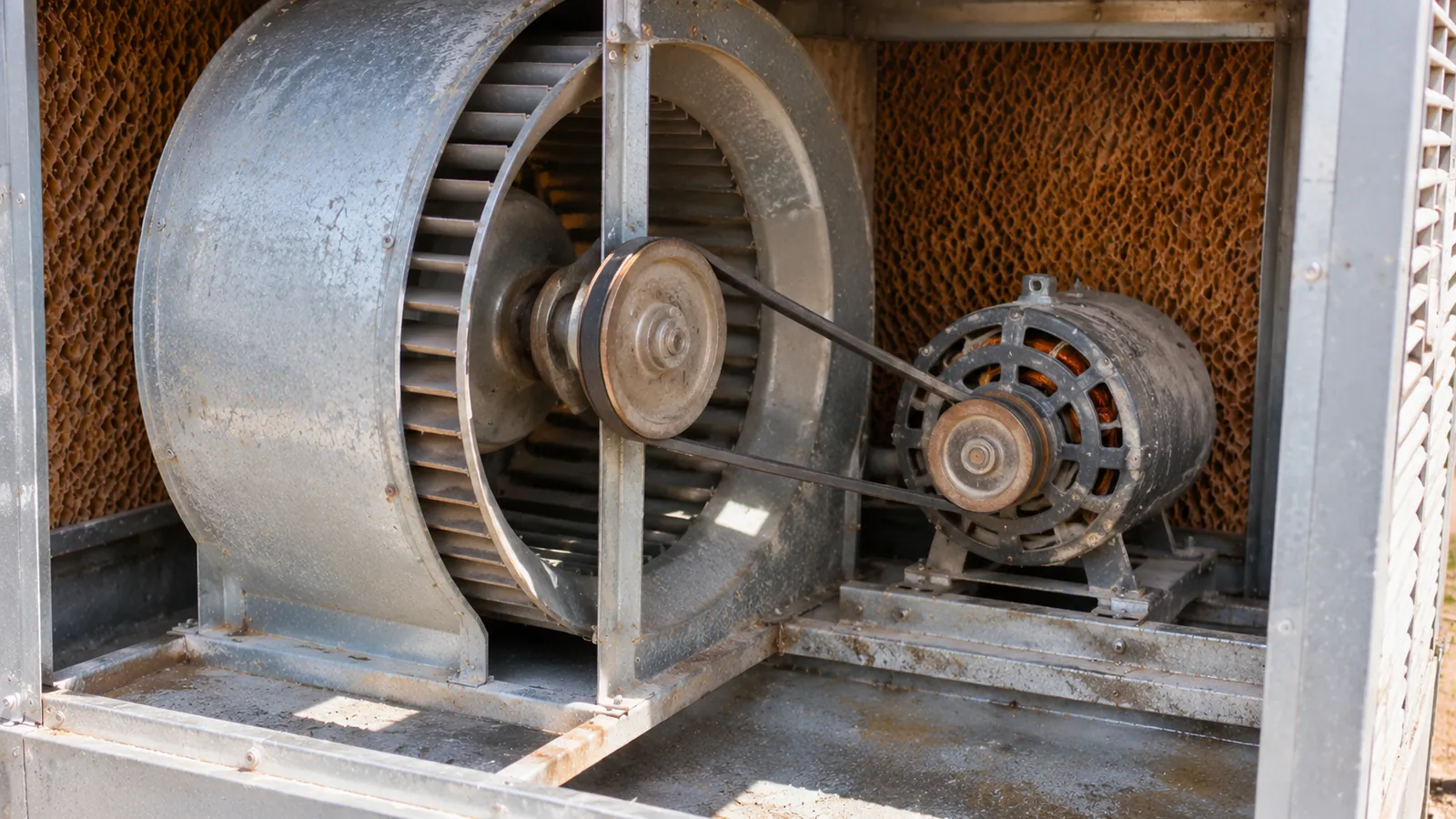
- Humming, squealing or thumping. A slipping belt, worn bearings or a failing motor.
- Cooler runs but no air comes out the vents. A broken belt, failed motor or closed damper.
- Water bill jumped. A float stuck open or a purge line running constantly.
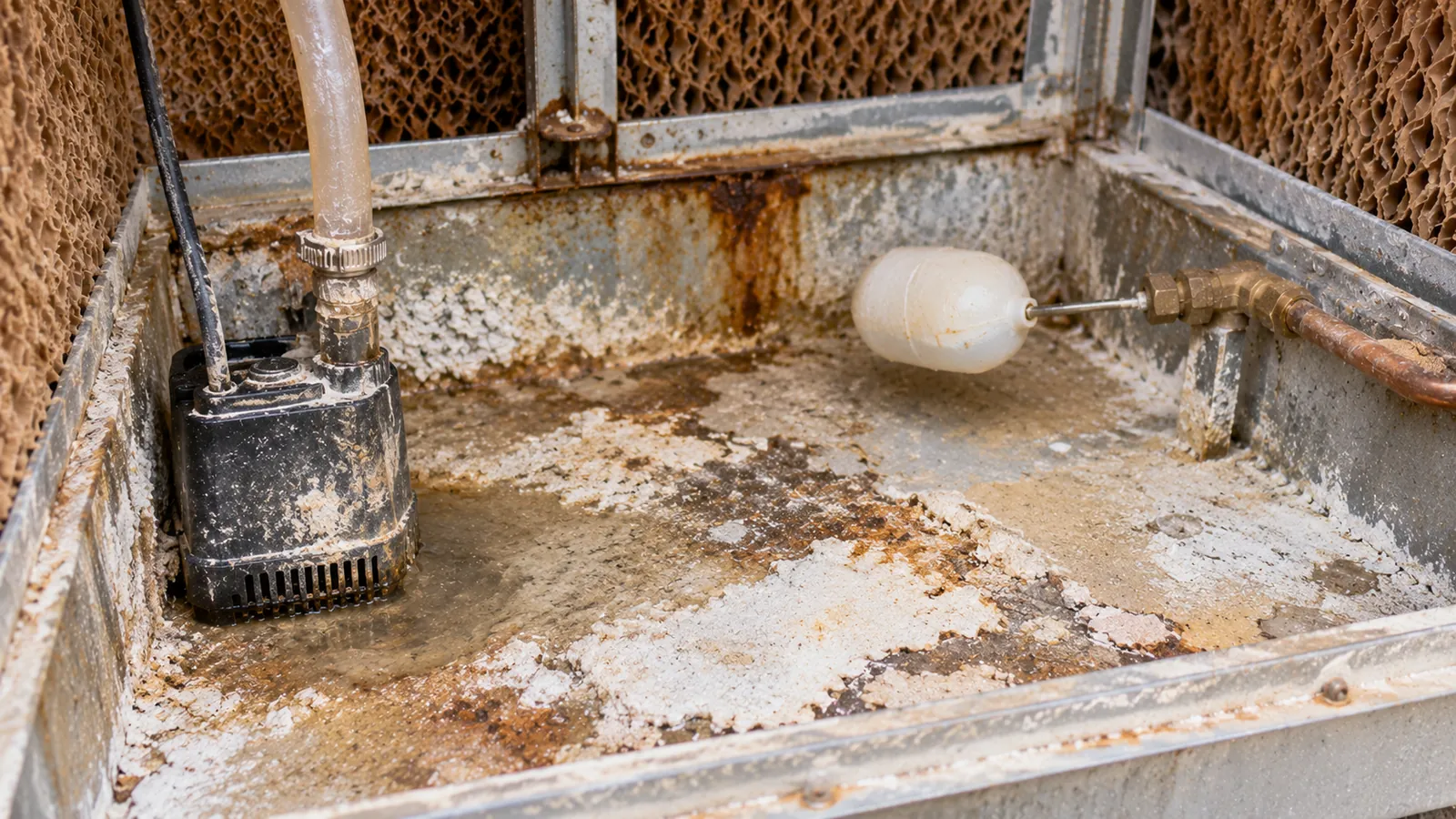
- Rust, white crust and pinholes in the pan. Albuquerque's hard water is eating the cooler.
The parts that fail, and why
Pads
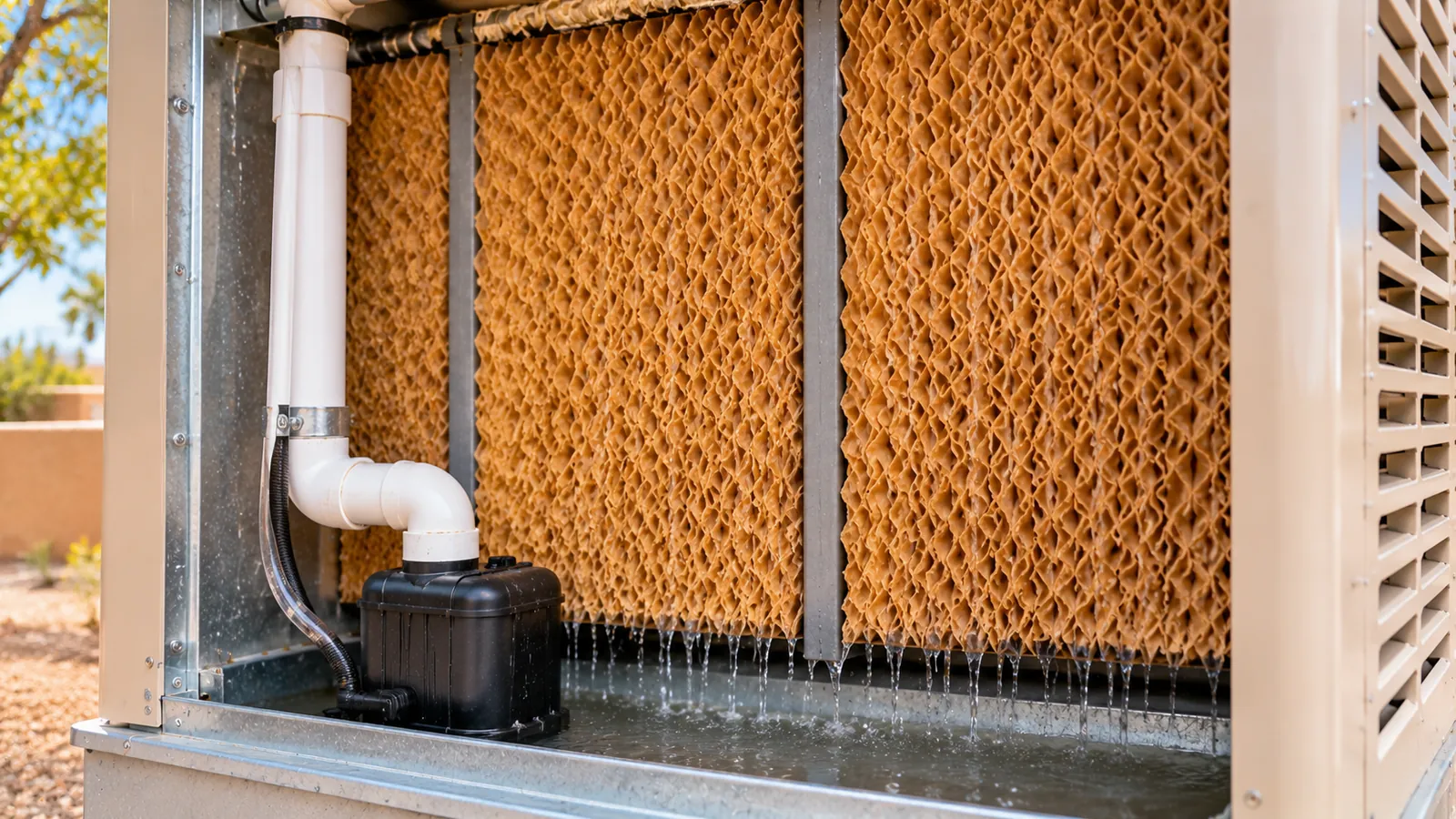
Every gallon of water a cooler evaporates leaves its minerals behind on the pads. In Albuquerque's hard water, aspen pads crust over in a single season and stop holding water. Rigid media pads last much longer and cool better, but they're thicker and cost more up front. See aspen vs. rigid media pads.
Pump and distribution lines
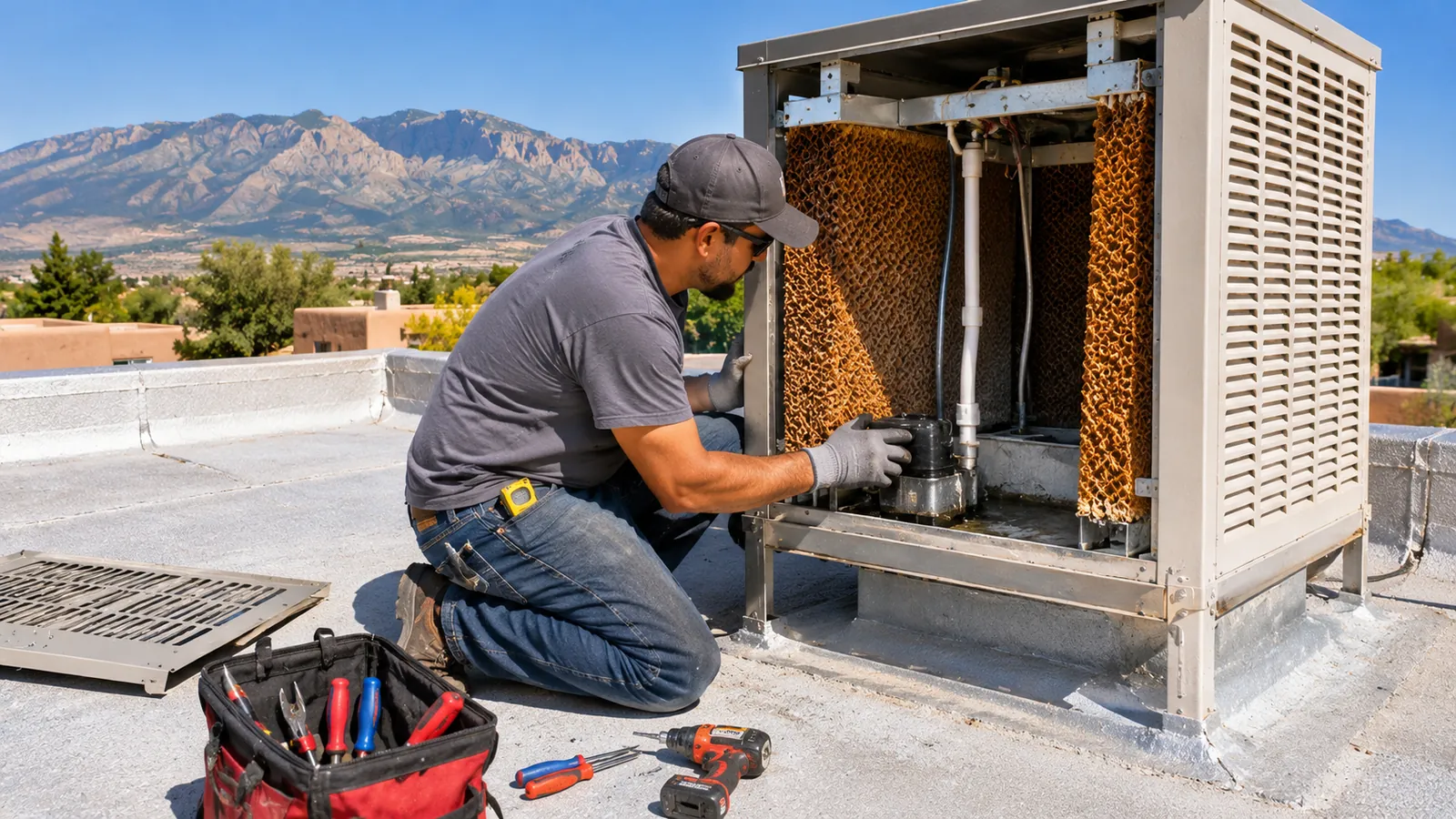
The pump lifts water from the pan to the top of the pads. Mineral scale clogs the pump inlet and the little holes in the distribution tubes, so some pads stay dry and the cooler blows warm.
Float valve
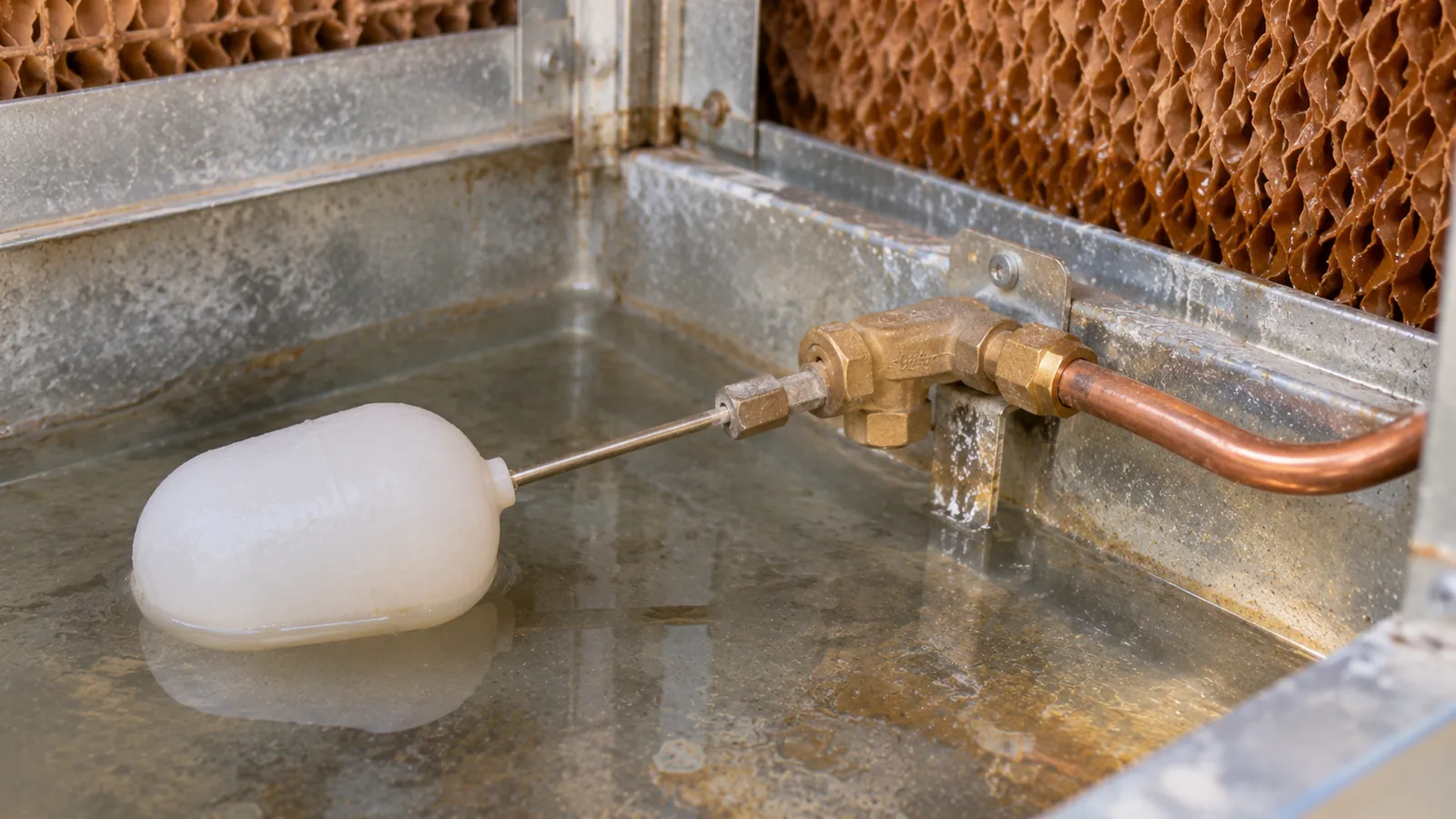
The float keeps the pan filled to the right level. When it sticks closed, the pan runs dry; when it sticks open, water runs off the roof all day.
Belt and motor
Belts stretch and crack in the summer heat. A slipping belt squeals and moves less air. Motors wear out from years of running in a hot, humid box. We match motors to the blower and the cooler's rated airflow.
Purge or bleed-off
A purge pump or bleed-off line drains away some mineral-heavy water so scale builds up slower. It's one of the best ways to make a cooler last in Albuquerque, and many coolers don't have one.
Spring start-up and fall shutdown
Coolers need two visits a year. In spring we reconnect the water, replace or clean the pads, check the pump, float, belt and motor, clean the pan, open the dampers and test the cooler. In fall we drain the lines and pan, disconnect the water so nothing freezes, close the dampers and cover the cooler to stop cold air and dust from coming down the duct all winter. See seasonal service.
Repair or replace?
| Situation | Usually the right call |
|---|---|
| Warm air, cooler otherwise sound | Pads, pump or distribution cleaning |
| Squeal or weak airflow | Belt adjustment or replacement |
| Motor hums but won't start, or trips | Motor or capacitor replacement |
| Water running off the roof | Float valve or line repair |
| Pan rusted through, cabinet falling apart | Replace the cooler |
| Cooler is 15+ years old and needs a motor and pan | Replace, and consider a rebate-eligible rigid media model |
New coolers and the PNM rebate
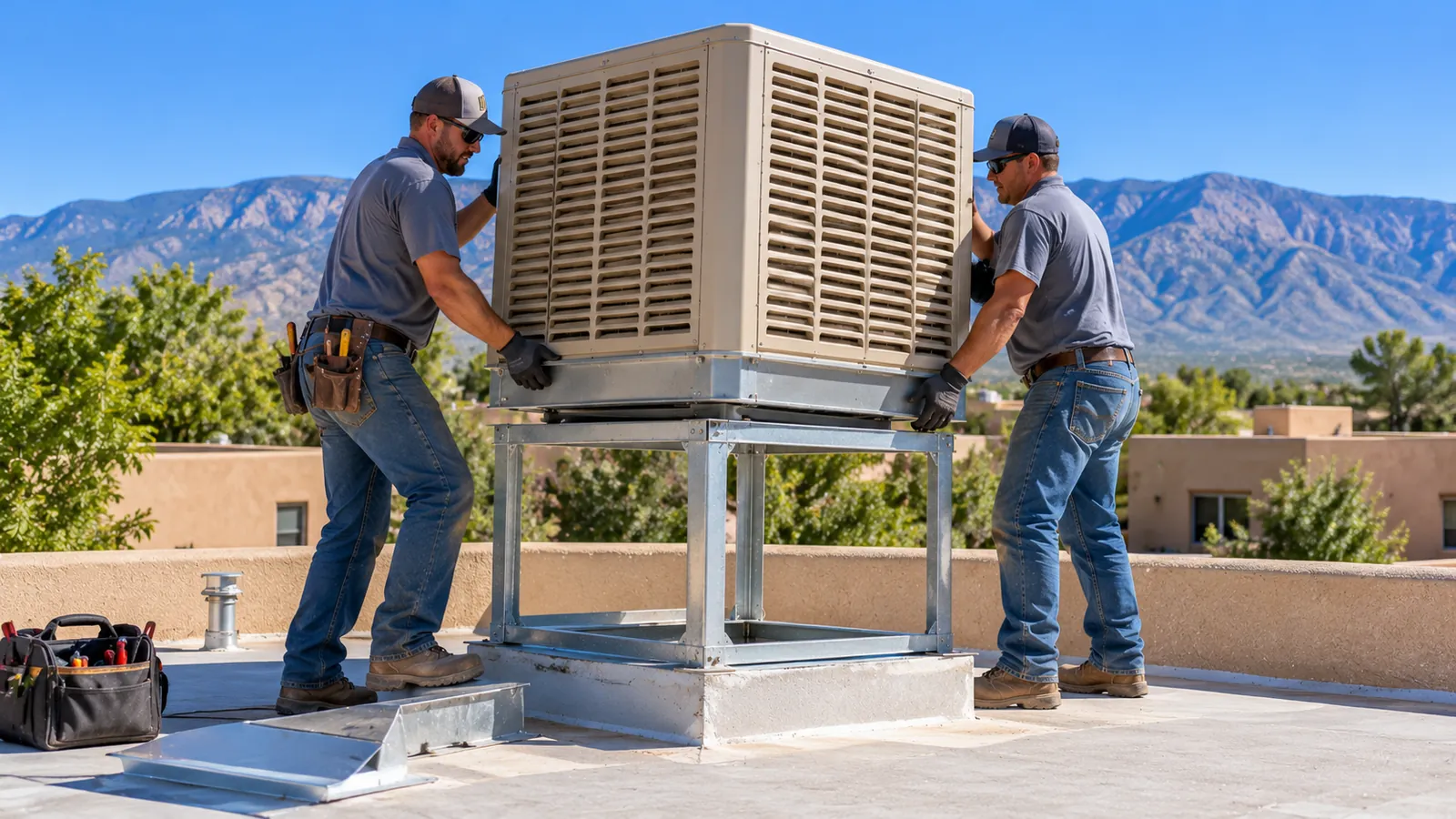
If it's time for a new cooler, a model with 12-inch rigid media cools better, holds up longer to hard water and may qualify for a PNM rebate. We'll help you choose a unit on PNM's qualifying list and give you the paperwork you need. See PNM swamp cooler rebate and installation.
Down-draft or side-draft?
Most Albuquerque roofs carry down-draft coolers that blow straight down into the duct. Homes with ground-level or wall installs often use side-draft units. Replacing like-for-like is simplest, but sometimes switching makes sense, like moving a cooler off a leaky roof. We'll look at your ductwork and roof and recommend the right fit.
Monsoon season and humidity
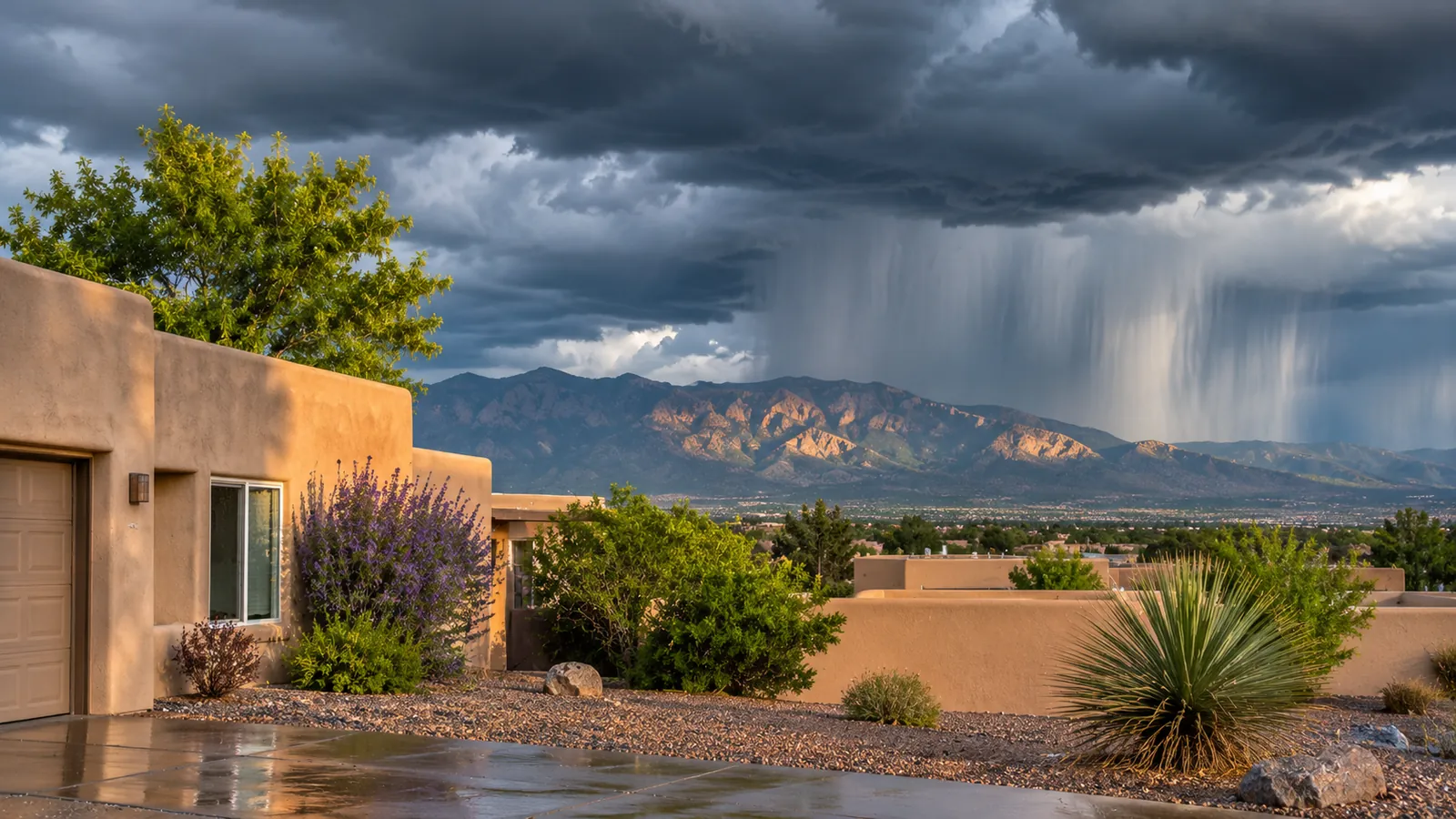
Evaporative coolers work best when the air is dry. During the July and August monsoon, humidity rises and every cooler loses some of its punch. That's normal. A healthy cooler with good pads and full water flow will still do far better than a neglected one. Some homeowners add a refrigerated air system or a mini split for the muggiest weeks.
Protect your roof
A leaking cooler can soak a flat roof and the ceiling below it. We check the roof jack, curb and drain lines around the cooler and route bleed-off water to a drain or downspout instead of onto the roof membrane.
Sizing a cooler for your house
Coolers are rated by airflow in cubic feet per minute (CFM). Too small and the far rooms never cool; too big and the house feels clammy and drafty. A common starting point is enough airflow to replace the air in the house every couple of minutes, then we adjust for ceiling height, sun exposure, how open the floor plan is and the length of the duct run.
| Home size | Typical cooler range |
|---|---|
| Up to about 1,200 sq ft | Smaller down-draft or side-draft unit |
| About 1,200 to 2,000 sq ft | Mid-size unit, most common in Albuquerque |
| 2,000+ sq ft or two stories | Large unit, sometimes two coolers or a ducted upgrade |
These are only starting points. We look at the house before recommending a size.
Albuquerque's hard water and your cooler
A swamp cooler is basically a machine for concentrating minerals. Every gallon that evaporates leaves its calcium and magnesium behind in the pan, on the pads and inside the pump. That's why Albuquerque coolers crust over so fast. Three things slow it down:
- A bleed-off or purge pump that drains a little mineral-heavy water and replaces it with fresh.
- Rigid media pads, which shed scale better than aspen.
- Regular pan cleaning at start-up and mid-summer.
Bad smells from the cooler
A musty or fishy smell usually means stagnant water, old pads, algae in the pan or a pump that isn't circulating. Draining and cleaning the pan, replacing the pads and making sure the bleed-off works usually clears it up. If you smell something burning, turn the cooler off and call: that can be a motor or wiring problem.
Brands we service
We work on the coolers you'll find on Albuquerque roofs, including Master Cool, Phoenix Manufacturing and Champion units, plus premium rigid media coolers such as Breezair. Parts like pumps, floats, belts and motors are often interchangeable, and we carry the common ones.
Controls, thermostats and dampers
Older coolers run off a simple wall switch with high, low and pump settings. Newer controls add thermostats and timers, so the cooler can pre-cool the house in the morning and back off at night. Ceiling dampers and duct plugs let you shut the cooler off from the house in winter. A sticking damper or failed wall switch can make a perfectly good cooler seem dead.
Where we work
What to expect when you call
- A real person asks what the cooler is doing and how old it is.
- An honest read on whether it sounds like a quick part or something bigger.
- A time to come out, and a price before any work starts.
We're call-only: no forms. Call, tell us what's happening, and we'll get the air blowing cold again. Call (505) 448-8171
Swamp cooler guides
- PNM Swamp Cooler Rebate
- Swamp Cooler Not Cooling? 8 Causes
- Swamp Cooler Leaking
- Swamp Cooler Pads: Aspen vs. Rigid Media
- How to Winterize a Swamp Cooler
- Swamp Cooler vs. Refrigerated Air
- Swamp Coolers in Monsoon Season
- Swamp Cooler Costs in Albuquerque
Questions we hear
How much does swamp cooler repair cost in Albuquerque?
Most repairs are a single part: a pump, belt, float valve, motor or pads. Those cost far less than a new cooler. We tell you what failed and the price before we fix it. See swamp cooler costs.
When should I schedule my swamp cooler start-up?
Most Albuquerque homeowners start their coolers between April and May, once nights stay above freezing. Booking early in spring avoids the first-heat-wave rush.
When should I shut my swamp cooler down?
Usually in October, before the first hard freeze. Water left in the lines and pump can freeze and crack them.
Is there a PNM rebate for swamp coolers?
Yes. PNM offers rebates on qualifying advanced evaporative coolers, including down-draft and side-draft units with 12-inch rigid media. Units with 8-inch media don't qualify. See our PNM swamp cooler rebate guide.
Why is my swamp cooler blowing warm air?
Usually dry pads from a failed pump, clogged distribution lines or a stuck float valve. During monsoon humidity, every cooler loses some cooling power. See swamp cooler not cooling.
Should I switch to refrigerated air?
It depends on your home, budget and comfort needs. Coolers are cheap to run in dry heat; refrigerated air works in any humidity. See swamp cooler vs. refrigerated air.
Do you replace pads, pumps and belts?
Yes, along with motors, float valves, purge pumps, thermostats and ductwork.